Tuesday, January 30, 2007

Phnom Penh, Cambodia

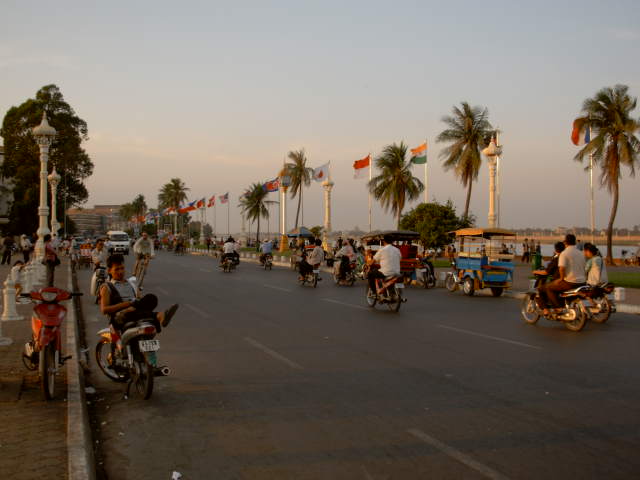
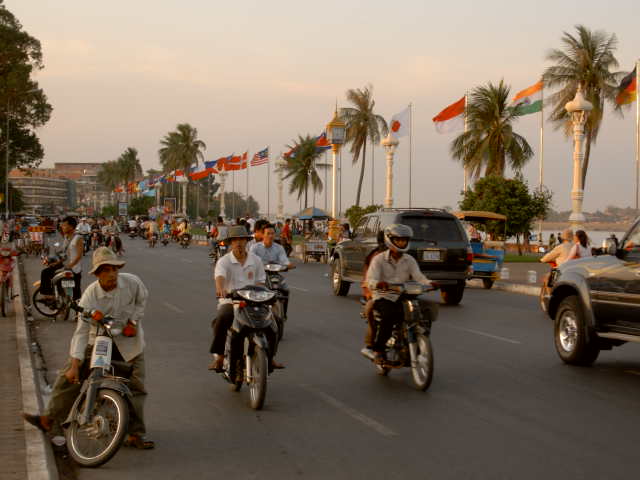
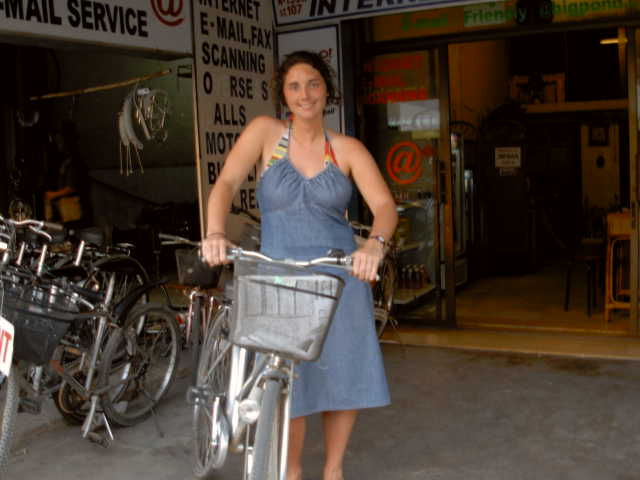
I rented a bike to ride around in Phnom Penh, but it was much easier than it looked! The traffice was crazy, and there are no sidewalks to ride on, so I had to ride in the streets with the motorbikes and obey all traffic laws as if I were a car or motorbike! By the time I returned the bike after two days it was definitely time!


This is the street that runs along the river; sunsets were beautiful and everyone was out walking, eating ice cream, chatting; it was really nice.


Here is a small example of the crazy traffic I'm talking about. There are hardly any stop signs or street lights, so if you want to cross a street, you just have to go for it! If you hesitate you're a goner, so you just have to go and everyone else will adjust to you.


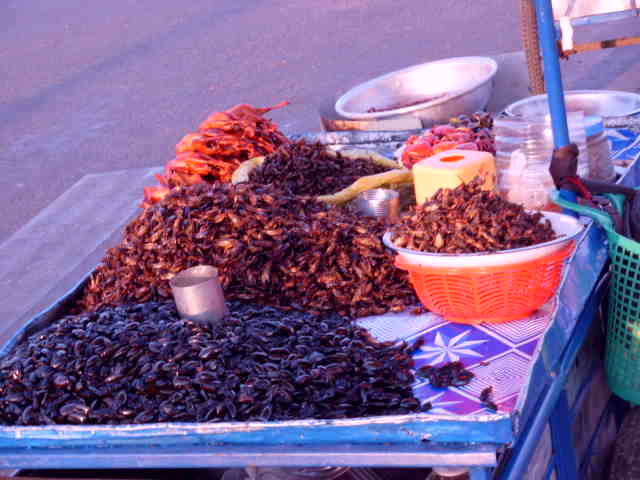
This is a typical Cambodian snack: bugs. Considering that I am not exactly a good friend to insects, these have yet to enter my mouth.


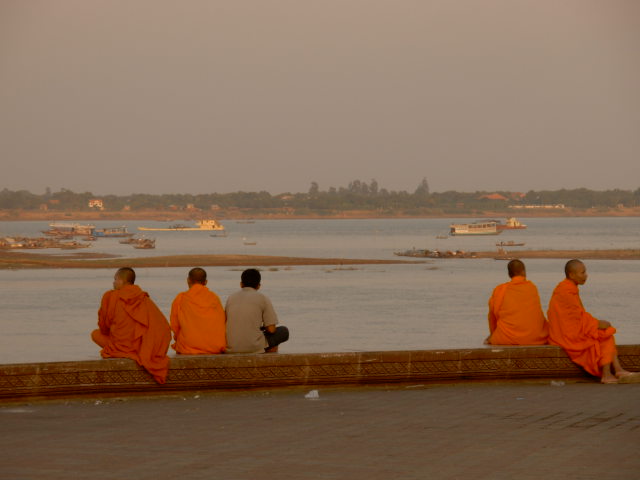
Some Cambodian monks by the waterfront at sunset.

The Ancient Temples of Angkor Wat, Cambodia

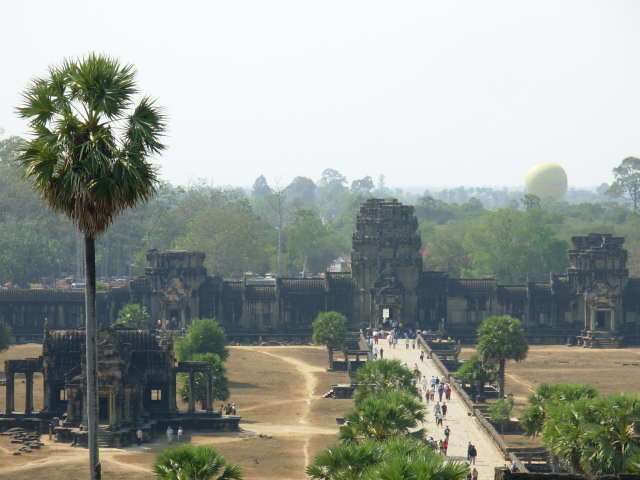
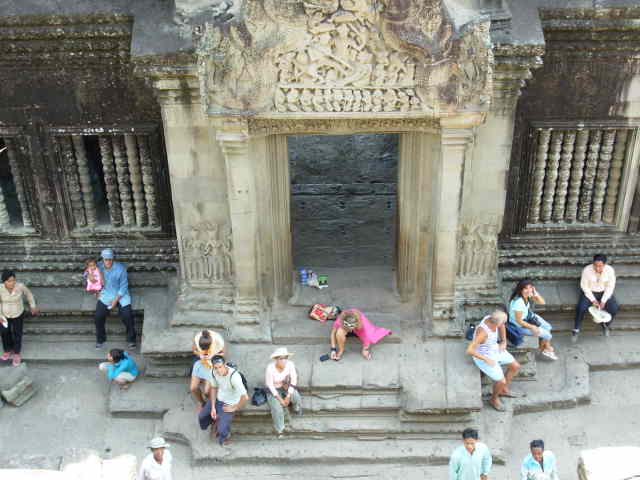
Angkor Wat temple is one of the largest. You can see all the tourists walking in and out; it was definitely a hot spot for tourism, but still beautiful.


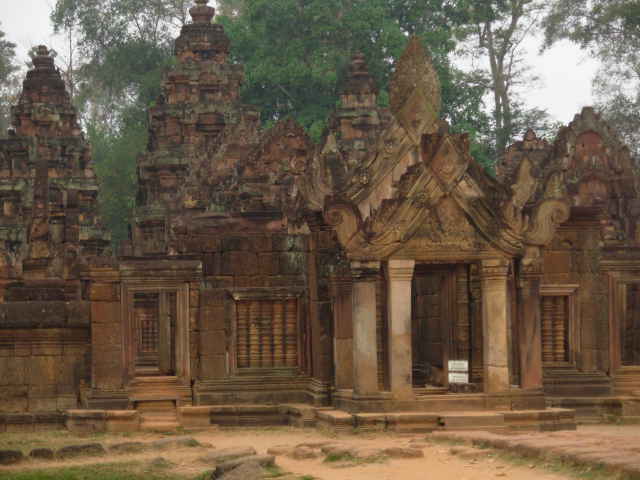
Another temple...
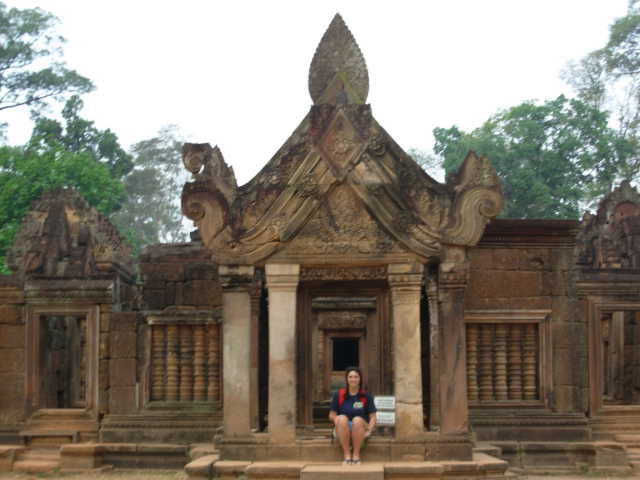
Here I am, hot and tired, but still happy to be at these amazing temples. There were so many temples that you could easily spend a week there and see all of them just once. I spent three days and say the most important ones.


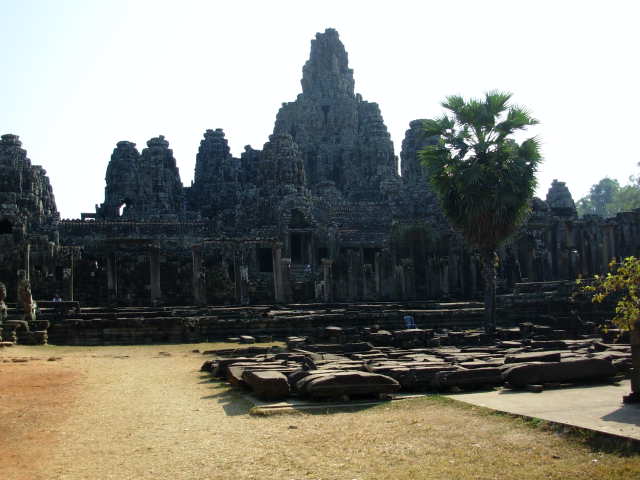
Another temple...
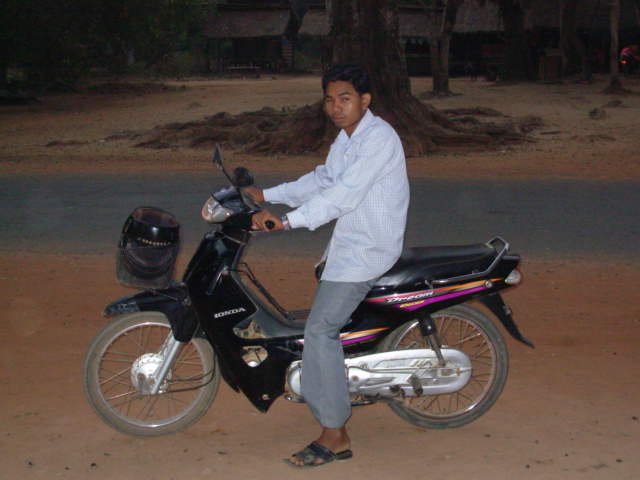
This was my moto driver. He was nice, but was definitely trying to rip me off at every turn. Maybe not rip me off as much as he wanted me to spend my money on his services and those of his friends, which were often not the cheapest available. His name is La and he's 26 like me.


This is at Angkor Wat. You could climb up these very narrow stairs and look down on the temple. It was really beautiful, but the stairs are REALLY steep and it's hard not to get dizzy when you're coming down.

Monday, January 29, 2007

Mui Ne, Vietnam

I know that it has been awhile since I updated my blog, but I've been busy, I promise. I am in Vietnam right now, in a little beach town called Mui Ne. I am leaving in about an hour to head up north to a traditional village called Hoi An. Mui Ne is a beautiful little fishing village with a great beach and many people who have come to windsurf or kite surf, due to the heavy winds at this time of year. I arrived in Cambodia on the 20th of January, where I saw the ancient Khmer temples, which were really very spectacular, but there were a lot of tourists, so I only stayed 2 nights. I moved on to Phnom Penh where I stayed for 3 nights, and really enjoyed that city. I rented a bicycle and attempted to ride the streets of the city; however, it is much easier said than done, as traffic rules seem to be non-existent. I was in Saigon for 3 nights and met up with another American and a girl from Finland. We had fun seeing the sights and visited the Cu Chi tunnels, which are the underground tunnels where the Vietnamese hid out during the Vietnamese War, which is referred to as the "American War" in this country. These tunnels played a huge part in their ability to sustain themselves against U.S. troops, and they were really very intricate. If there's something I've observed about the Vietnamese, it's that they seem to be determined, efficient and quite clever (generally speaking of course). These tunnels were over 10 meters deep at places, they had different levels and trap doors, etc. to fool the U.S. troops. They were also very small so the U.S. soldiers had trouble getting around in them. After Saigon (also referred to as Ho Chi Minh City) I came here to Mui Ne and have been enjoying the sand dunes and the beach. I met a woman from the UK who I shared a room with, and some young French people who have been really great, so not to worry! There are so many foreigners traveling this beaten path that I rarely feel like I am on my own, at least not completely. I found that there were a significant fewer number of travelers in the Philippines, but both are nice experiences, just different. I will post some pictures as soon as I gain access to a better computer, as this one does not have the outlet that I need.

Tuesday, January 16, 2007

Where I'm headed next...

I realize that I've made exactly three blog entries in one day, after not writing for a week, and there are no guarantees as to when I will write again, due to the crazy schedule that I'm currently keeping, but if three entries is too much to read in one day, just read one, come back in a few days and keep plugging away at it until you manage to catch yourself up. In the meantime, it is very likely that I will not have written a new one so please, take your time. I just wanted to give a very general outline as to where I am headed next... I am flying back to Manila tomorrow morning for one night, then I will fly to Kuala Lumpur, Malaysia for one night, and onto Siem Reap, Cambodia on Saturday, January 20th. I will spend two nights, maybe three in Siem Reap looking at the ancient temples of Angkor Wat... I will then head to Phnom Penh on a bus and stay there for a few days before entering Vietnam. For those of you who were paying attention to what I might have told you when I was home for Christmas, yes... I did say that I was going to Thailand and Laos and I did not mention Kuala Lumpur. Thailand has been post-poned to a future date that could be anywhere from 6 months to 30 years from now and so has Laos...there just isn't enough time, and The Philippines sort of sucked me into it, in fact I could have stayed here the entire 5 weeks, but I am trying to strike a balance, by cutting out some, while still keeping other essentials. Anyways, I plan to be in Vietnam for two weeks from the 25th through the 8th, when I will fly back to Manila via Kuala Lumpur (don't ask; it was the cheapest flight available) and on February 10th I am off to Hong Kong for 5 days before landing in Seoul on the 15th and flying home to Jeju Island. My mother wrote me an e.mail and she had obviously been looking up some of the places that I have been visiting and she asked a very good question: "How do you choose the places that you are going to?" I am not sure I have an answer to that question... it ends up being a combination between amount of intrigue combined with feasability and speculation as to the amount of other tourists that will be there. The level of intrigue comes from what I read in my travel book and on the internet, as well as what I hear from other travelers, the feasability is in regard to amount of time it will take me to arrive and whether I can afford it, which in these countries I usually can, and I can only speculate as to how many other travelers will be there through what I read in the tourist book (Lonely Planet's Southeast Asia on a Shoestring). All of these work together also, because if there will be a lot of tourists, I may still go, but will try not to stay as long (this is the case with Angkor Wat) and usually the harder it is to get to a place, the less tourists that will be there. I also try to get as much geographical variety in a country as is possible in the amount of time that I have, in order to expand the scope of my overall experience. I know that this sounds very scientific and in fact it is (I use an excel sheet, to plug in the figures and determine my next destination, just kidding). It is a good question, and it's funny, because usually what happens is that I think I know where I'm going and then I speak with someone who says it's raining there, or there are tons of people, etc., so I change courses, but once I decide for sure, there is nothing stopping me from getting there. It becomes a mission and no matter how many hours on the top of a jeepney or a winding rough mountain road, there is NOTHING that can stop me from getting there. I do have moments when I sort of have these slight out of body experiences, (an exaggeration, but the best I can explain it) and I'm sort of looking down at myself laughing... because I'm not sure it's worth it... the sunburn, the strenuous transportation, not being able to stop and urinate for hours, the smells, the sickness, whatever it may be...all to see some rice terraces and an underground river that I could've looked up on the internet, but it is the journey itself, the adventure, that I find the most intriguing and maybe the most rewarding, so I just keep on moving and each destination that I arrive at only makes me hungry for more.
My fellow Korean Residents

It's interesting, because no matter how long you live in a foreign country, you're still never "from" there, especially when your physical appearance or accent so blatantly gives you away. You live your life as a "foreigner" or a "westerner" (in Asia) in the culture, even after you've learned the language! That is all relative to the fact that you were not born there and the natives/locals were; however, when you find yourself in a country that is neither theirs nor yours, suddenly you are brothers, or at least you find yourself with a sort of kinship that had never been previously tested. For example, I have run into many Koreans (this is a hot travel spot for Koreans I'm learning) and when I meet them, I feel close to them in a way that I do not in Korea and I think they feel the same. Suddenly it becomes very apparent that although I will never be "Korean" I am still much more "Korean" than someone who has never been there, and especially someone who has never lived there. It goes beyond the fact that I know what Koreans eat and some of their language, in the past few months I have been immersed in their culture and they know as well as I do that I understand them better than the average person. In fact many Koreans come off as sort of abrasive, egotistical and even a little annoying (I've found this out through talking with some of the Philippinos that I've met.) It's funny, because I can see how an outsider might think that; however, it takes the kind of cultural experience that I've had to look past those things and see how it all fits together, how you can't have the good without the bad and they are all inter-connected to a history that is very different from my own or the Philippines. I can sympathize with Koreans in more way than one, because I'm constantly encountering the same experience as an American. Most of the people I meet have never been to the United States and don't want to (almost out of pride); the people to which I refer are mainly Europeans. The other night I had dinner with an Austrian couple that I had been scuba diving with and I provoked a political discussion, by asking many questions about Austria's government, which in turn led to a discussion about the USA. The woman in particular had a lot of animosity towards the USA and I sat and listened patiently while she basically preached every stereotype in the book as if it were the gospel... and as she went on about the fat Americans who only eat junk food and live in a society that is NOT diverse OR free...I mean you can't drink until you're 21~ and in order to get a VISA to visit the USA you have to tell them how many times you go to the bathroom everyday...etc., etc. She went on and on...and on... and I let her, but I definitely realized that this woman was in fact an outsider. If she had lived in the USA, yes she probably still would've held many of those views; however, I can only hope that she would have at least understood a little better that what makes us bad also makes us great, that it's all inter-connected and there is not country that is perfect, not even Austria. America has become a sort of international punching bag and although I don't think that it is totally un-deserved, I also wish that people would acknowledge that there is an America which they fail to see, in fact refuse to see. The night before that encounter I had dinner with a Korean couple who I had gone scuba diving with. The man lives in Pusan and he was a Korean physical education teacher in a middle school. We were able to talk and joke and compare notes on the customs and culture of Korea and they were both amazed at what I knew in the way of customs (thank you Fulbright). I felt very close to both of them, and grateful that I'd run into them and they seemed to feel the same. When you realize that you don't think like an outsider, you realize that you are in fact an insider, almost by default, because I certainly don't feel like one in Korea, but relative to everyone else I think I qualify.
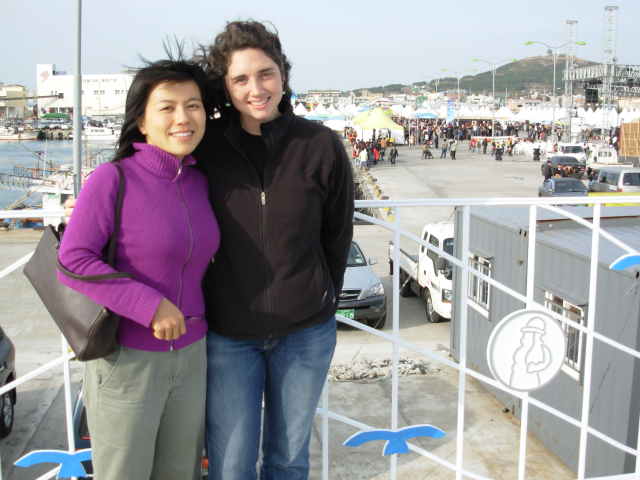
Palawan Island, The Philippines

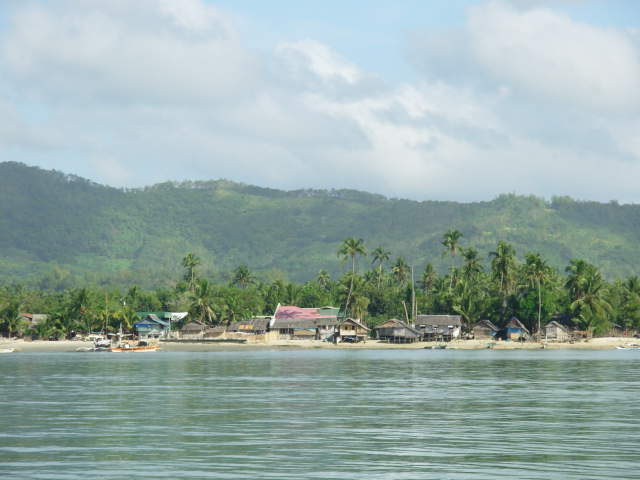
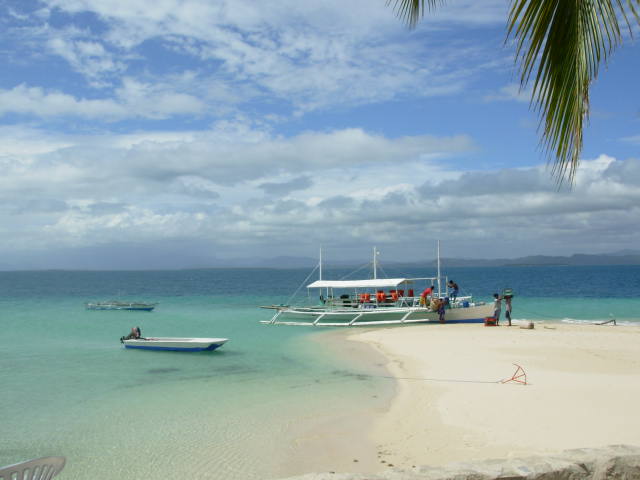
Here is a typical beachtown, this one is called Roxas on Palawan Island, and it was where I caught the boat to Coco Loco Island Resort, where I spent the last four days.


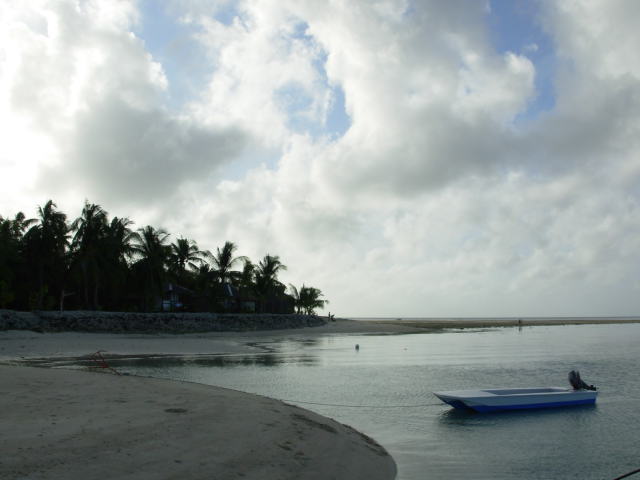
Here is a picture of Coco Loco Island; it's takes about 15 minutes to walk around the entire perimeter of the island... and the resort and the dive shop are the only things on the island. I spent the days lying in my hammock reading, scuba diving every morning, and eating delicious food!


I took this picture sitting at one of the dining tables on the beach! It was such a great place to stay. The meals and the lodging (a sort of cabana with a mosquito netted bed, bathroon, and a porch with a hammock right on the beach.) The resort has about 20 cabanas, and there were probably about 15 other people there with me while I was there and about as many staff members not including the scuba diving guides. Every day you just had to tell them what you want for breakfast, lunch and dinner (dishes ranged from vegetable curry with rice, to fish steaks or chicken in a spicy coconut sauce) and what time you would like to eat... it was REALLY relaxing. There was no internet and no phones! Your only responsibility was to relax and enjoy yourself, which I definitely did!


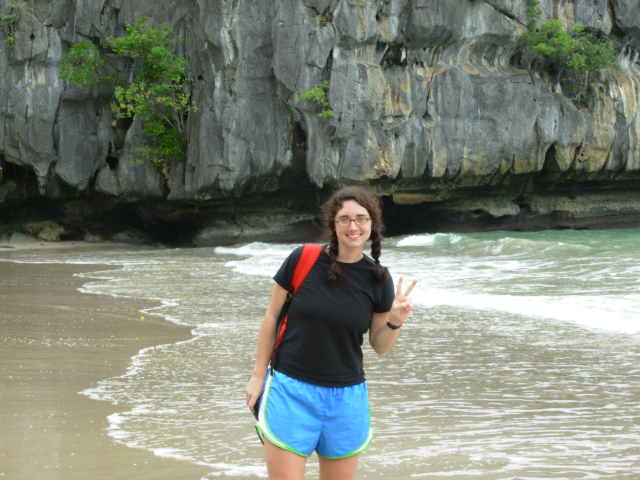
Here I am outside of the Underground River in Sabang... it was pretty amazing! I've never seen that many bats in my life; the cave was pitch black and we were in a paddle boat (5 of us and a guide)... it was thrilling to say the least. I was at the front of the boat holding the flashlight which was connected to a sort of car battery through jumper cables, and I tried not to think about what would happen to us all if we turned over and were in the water with that battery. Anyways, because I was holding the flashlight all the bugs and the bats were sort of dive bombing me...good thing I was wearing a helmet...


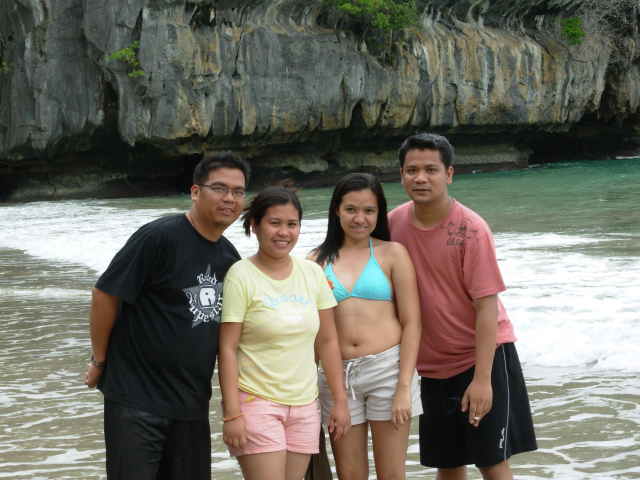
Here is a picture of the four Philippinos from Manila on vacation. I went with them in the boat, etc, because you paid per boat. Afterwards they bought me lunch and gave me a ride to my next stop... very, very nice, and I hope to return the hospitality if and when they make it to the USA!


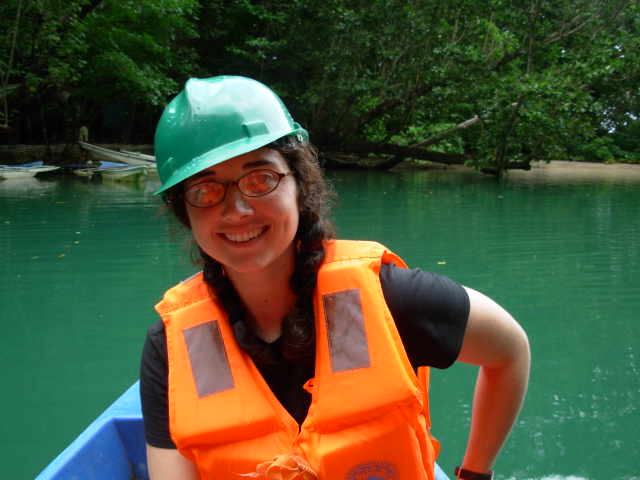
Here I am in the nifty hard hat that kept me from being grabbed by little bat feet, and kept me from the other various droppings that fell from the ceiling of the cave, not limited to condensation if you know what I mean...


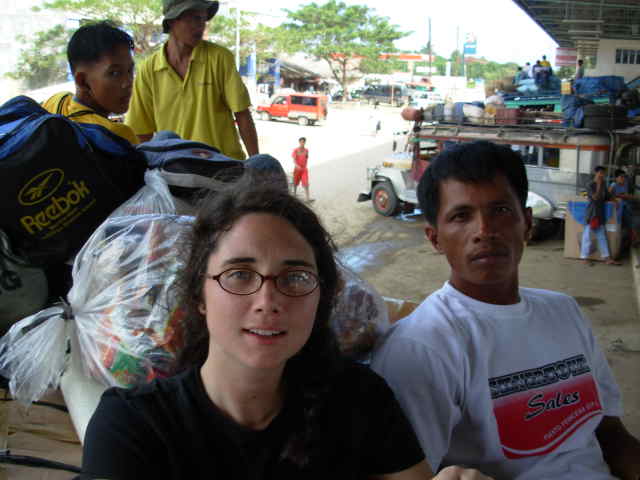
Here I am on my first day in Puerto Princesa (the capital of Palawan). I rode on the top of a Jeepney (you can sort of see one in the bag right corner of the photo) piled high with luggage and boxes, along with 15-30 Philippino men (it ranged because people kept getting on and off.) The road was hideous and the ride took about 3.5 hours, many times we were not traveling at much more than 20 miles per hour. The men were all really nice to me; they seemed to get a big kick out of having a foreigner traveling on the roof with them... they gave me the best seat: a bag of rice to sit on... I was traveling in style and luckily the sun was behind the cloud most of the ride, otherwise I would've ended up bright red, instead I was just slightly pink by the time we arrived in Sabang (this is the town where the Underground River mentioned above is located.)

Tuesday, January 09, 2007

"What are you waiting for?"

The bus ride from Baguio to Sagada was an 8 hour field trip through the Cordillera Mountains. I did nothing but peer from my window at the outside world resembling nothing I have seen before. The highway we were on was the only road that serviced these tiny mountain communities which at first look seemed to be self-sustaining. In reality self-sustainable is relative to the level of poverty that exists here; they aren't anywhere near having all of their needs met, but I there is nothing other than farming creating wealth in these communities, aside from the occasional bus that may or may not stop at the little stands on the side of the road where they sell crackers and other convenient store products for 10-20 pesos each (20-40 cents). As we rolled through town, heads would turn and people would shake their arm to get a ride (or maybe they were doing this for the entertainment value); if they were lucky our driver would stop, but most of the time he moved on, because we were too crowded, or maybe just because he felt like it, I'm not sure. Our bus also seemed to function as a sort of postal service. We took one large package from an old woman and 3 hours later the bus boy stopped at a little store that was not opened and leaned the package up against the wall before jumping right back on the bus, no payment ever changed hands on either end. (the bus boy acts as the driver's assistant, jumping out of the bus to tell him when to stop when he's backing up, and to put the make-shift emergency brake under the back wheel, something that looks like a hammer with a huge rock head.) As we traveled through these towns, what really struck me was the amount of people whose faces peered back at mine. These people were just sitting by the side of the road, or walking or just standing, or just looking. Basically, these people were not doing anything. What struck me as ironic is the amount of time that they have. I mean they don't have a job to be at, they don't have a school to go to, they don't have money to spend, food to eat, and heaven forbid they go jogging or do anything that might expend extra calories that they don't have the food to replenish. So it's best that they just sit there, chat with friends, watch for buses to wave at, toss stones at the ground, sit around a pile of burning trash to keep warm. What I find ironic, is that although they have no money, they have time. And in America, where money is plentiful, time is something that has become invaluable. In America there are beautiful houses with flat screen T.V.'s and plenty of other entertainment equipment, computers, and beautiful kitchens, left empty all day and part of the night while Americans are out doing what they do: being productive. I tried to picture one of the Philippino families let loose in a house like that just for the day, perhaps they would still just sit around and chat out of habit. Today my tour guide, Derrick said to me: "You're lucky that you can travel." His words were different than if they had come from another American, but at first my reaction was the same as if an American had said it, because I immediately thought about how lucky I was to get the time off to travel for two full months in the middle of the year, but what he meant was that I have the money to travel. Derrick told me he would like to travel to the United States. And hearing Derrick say that was different than if another American had said it, because it's not like when you hear a co-worker or a friend say something like: "I've always wanted to go to Greece or I've always wanted to learn how to cook". The most appropriate response is: "What are you waiting for?", and although we often say this to our friend or co-worker, we both know that time is what is lacking, but when Derrick told me that he really wanted to go to America, to Houston to be exact, I did not respond with "What are you waiting for." Because we both know what Derrick doesn't have: the means.
Rice Terraces, Banaue, Philippines

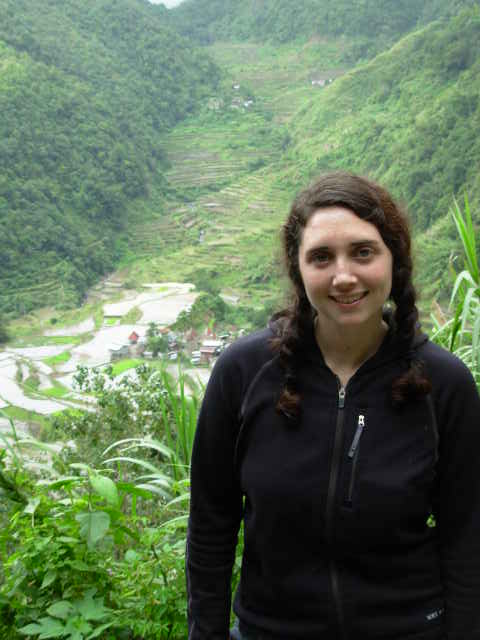
My guide (the mountain bike driver) took this picture. He waited for me at the bottom while I hiked for 4 hours! Tomorrow he will show me some hot springs and more rice terraces before I head back to Manila on the night bus (a ten hour ride on bumpy roads). Part of the reason I took this picture was to give my family back home proof that I am still alive!

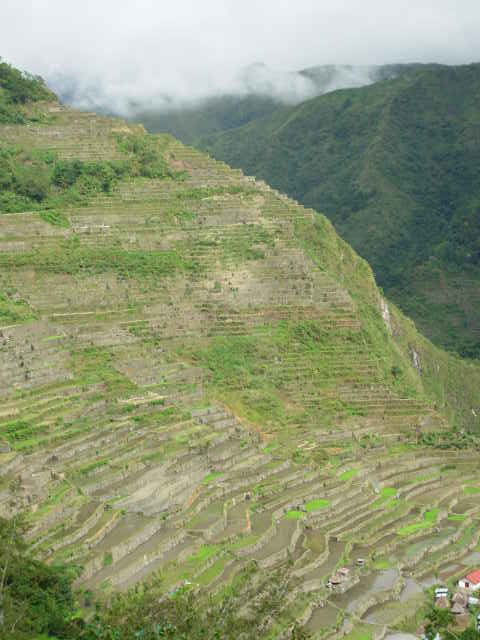
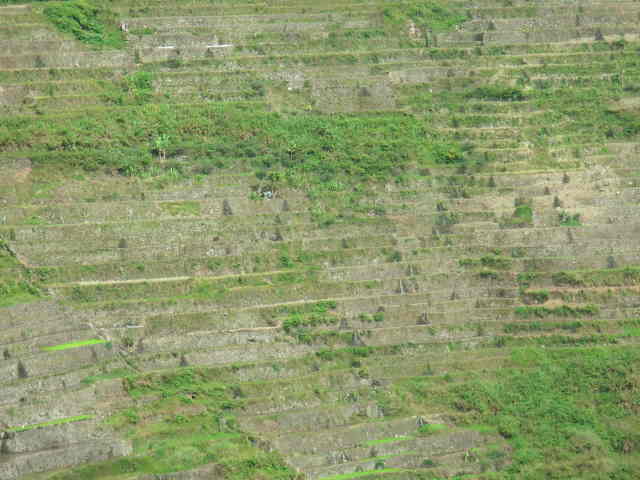
I hiked to these rice terraces, tucked deep in the mountains. My journey began in the side car of a "motorcycle" which is much more like a mountain dirt bike (the wheels are that size). I spent an hour in the side car, then my guide, Derrick, parked it and I hiked up over a saddle and down into a small town called Batad, where I had a great view of these rice terraces, the tallest in the region.

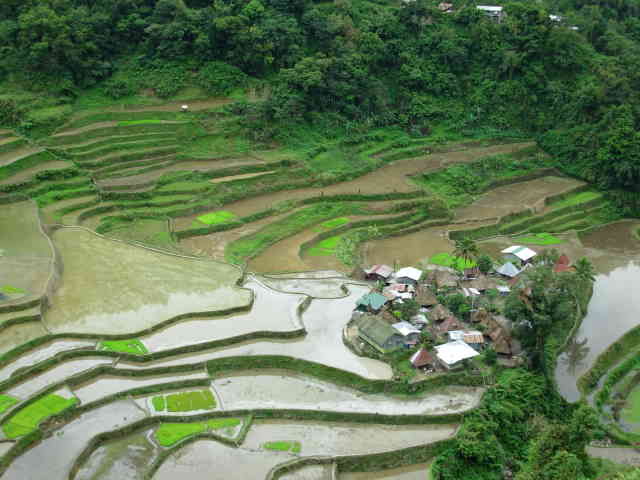
Here is a little town called Baranguay (at least I'm pretty sure that was the name, give or take an "r".) The people in the small town farm the surrounding rice fields. Each one is owned privately; a family may own 3 or 4, but they work together to farm them. The amount of rice that they farm only make up a portion of the amount of rice it takes to feed the village annually; the rest they buy from neighboring provinces. I thought they produced rice to sell, but I was wrong.

An upclose look at the Batad rice terraces... they're really quite exquisite.

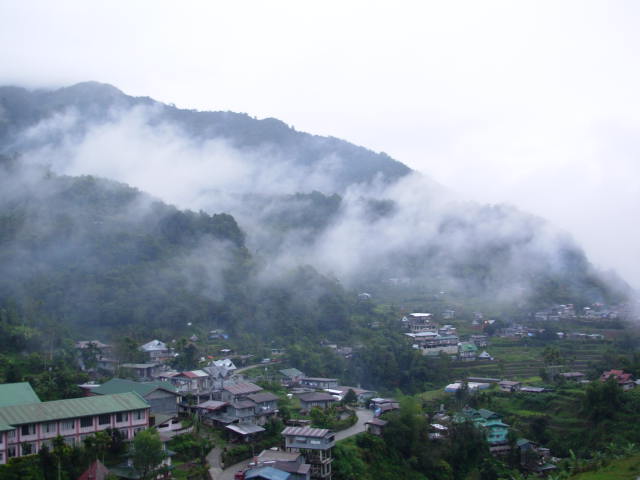
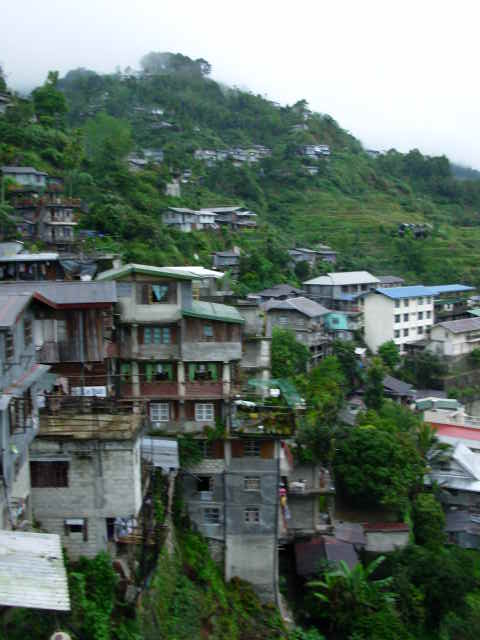
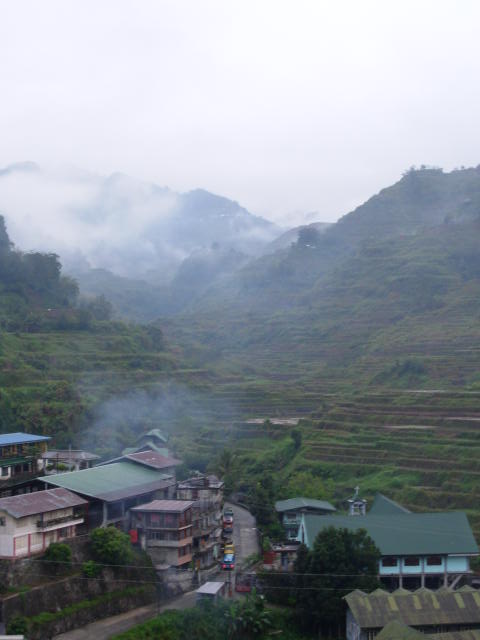
Another view of the town where I am staying: Banaue.

This is a side view of the town of Banaue. My hotel resembles these concrete structures from the outside, but is quite cozy and warm inside.

The view from the balcony of my room! The fog in the morning was so thick that I could see nothing but clouds from my window.

Monday, January 08, 2007

UPDATE...

I know that it has been over two weeks, maybe even longer since my last blog... a lot has happened since then. I went to the United States to visit my family and friends over Christmas and New Year's, which is part of the reason I didn't write at all... I have A LOT of family and friends... (just kidding, I don't have that many of either, but it still felt like an insufficient amount of time to spend with the people that I have missed since being in Korea.) On January 4th I returned to Korea for about 12 hours, before boarding a plane for the Philippines, where I am presently. I arrived on Friday, and it has been quite an adventure. This is the first decent internet cafe that I have encountered, and it could very well be the last, so I'm not promising anything after this entry, but I'm going to try very hard to update on where I am and what I am up to. At this moment I am sitting in a town called Banaue, which is tucked very high in the Cordillera mountains and it was quite a journey getting here, but it was well worth it. My days begin at 6am and I'm asleep by 9pm, sort of like camping. I have time to read, write, and attempt to plan out where I'm headed next. I have a hotel room that overlooks the Ifuago rice terraces, which are exactly what I came to see. Tomorrow, weather permitting, I will hike further into the mountains to get a better look at these spectacular rice terraces (sort of like shelves in the side of the mountain, carved 2000 years ago). I am very excited to take some pictures and post them! I arrived here this afternoon after a 3.5 hour journey in a vehicle that is referred to as a "Jeepney". As I have been told, Jeepeys only exist in the Philippines, in fact they are made here, and they are these long covered jeeps where they stuff about 12-20 passengers (the more the merrier seems to be the opinion of the drivers). It cost me around 3 dollars to get here from the town where I stayed last night called Sagada. In Sagada I saw hanging coffins, which are exactly what comes to mind: hanging coffins. These coffins are attached to the side of a mountain, rather than buried beneath the earth; this was the practice before Christianity came to the Philippines. The dead bodies were bond in the fetal position before putting them in a somewhat small wood coffin (representing the cycle from birth to death). In order to free the spirit they hang the coffins on the side of a cliff wall, or put them in the light, because light represents goodness, whereas criminals and other "evil" persons were buried on the dark side of the mountain or deep in a cave. These coffins really were worth the 8 hour bus ride on the windiest, steepest road I have ever driven on, in a bus crammed 5 people to a row. The bus ride to which I refer was from a town called Baguio, which is not where I originated... I came from Manila the day before on a 7 hour bus ride which wasn't that bad; however, I arrived here with some sort of stomache sickness which has yet to be diagnosed, which made that bus ride seem a little more hairy than it was. I even had an unfortunate experience in the ladies "restroom" at the bus station in Manila before departure. Luckily, I awoke this morning feeling much better, and I am happy to report that I am able to hold down solid foods, although my appetite is not exactly what it used to be. Now, I know that I have probably thoroughly confused you by telling my story backwards, and I promise to do a better job on my next post. I will give a few overall comments about the Philippines. It reminds me much more of South America than it does of Asia, and I am sure that is mostly due to the fact that it was colonized by the Spanish. The people here have been very very kind and they speak incredible English! The local dialect is an intresting fusion of Spanish, English, and Philipino. Tomorrow I will attempt a hike to the rice terraces and perhaps a waterfall. On Thursday I plan to head down to the islands and experience the tropical islands and scuba diving that I have read a lot about!

Monday, December 04, 2006

"Sorry, I don't English."

I walk home from school everyday around 4pm. This means that the only other people who are out on the streets are middle school and elementary students, and they all love to wave and say "hiiiiii" to me. I walk with my earphones on, but can usually spot them and lift my hand to wave fast enough that it's not considered rude. Sometimes I don't notice right away, but eventually realize that there is a small group of 5 year olds across the street in a huddle shouting "hi" at me. To this I always respond with a loud "hello" over the traffic that separates us, causing them to giggle in unison. All of this has become part of my daily routine; in fact, it would feel strange if I walked home without so much as a glance from the kids in the street. Today I was leaving my high school and I saw a group of about 7 middle school girls from the same school that my younger host sister, Sue Jeon, goes to. These girls were about 5 feet in front of me, and took turns twisting their necks in my directions and smiling with a small wave and a "hiiiii". I of course, did my normal wave and "hi" in response, but I decided to ask them if they knew my sister Sue Jeon, as they looked about her age. In Korea you can't just ask someone if they know Go Sue Jeon, because that would be like asking if they know John Smith times five. I noticed the other day when I was taking roll with my students, rather than two or three Smith, Anderson, Martinez or Hernandez last names in a classroom; there are like 10 Kims and 7 Gos, etc. This means that there are really only 5 last names that the whole classroom splits and some of the more popular names, like Kim Soyeon, have one per class at least. Instead of asking these girls if they knew Go Sue John, I asked them what class they were in, because my sister is in the second grade. I thought I could narrow it down from there; however, when I asked slowly and clearly: "What grade are you in?" The girls' faces showed nothing more than blank stares, if anything they just looked puzzled. From my point of view, I don't understand why it's puzzling that when you wave, stare, and yell "hi" to someone repeatedly in the street they strike up a conversation with you. I asked again and the girls stopped, still puzzled, but smiling. Finally one girl held up her hand (as if to say "stop") smiled, scrunched up her nose, and in a sweet voice said: "Sorry, I don't English." To this I responded with sincere comprehension: "Oh, you don't English."

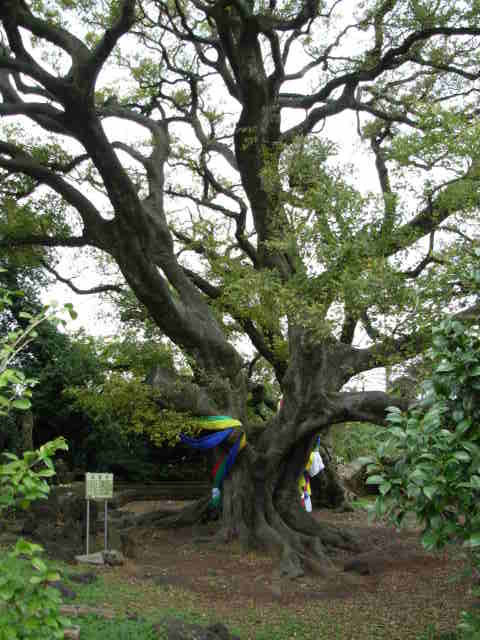
An Old Tree, Snow, Quail and Archery on Sunday

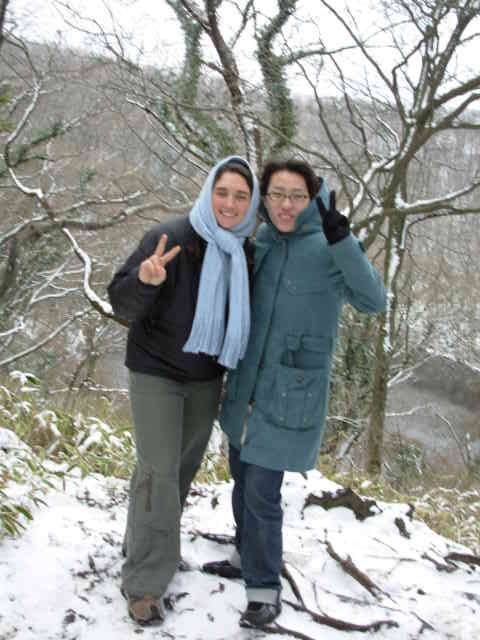
The head teacher of the second grade wanted to take me to see some of the special tourist attractions on Jeju Island, so he enlisted my friend and fellow English teacher, Soyeon (she is two years my junior), as a translator and we set the date for Sunday December 3rd. I was told that we would go hiking and then do some archery. So at 10am we were off! First we drove away from the coast, towards the middle of the island and as we did we gained in altitude; this meant that the rain became snow, the first time I've seen snow on Jeju Island.


Our first stop was the oldest tree on Jeju island (over 400 years old). After snapping some photos of the tree, we drove a little further, eventually arriving in what felt like the middle of a forest. I could not believe I was still on an island; we had been transported to a winter wonderland.


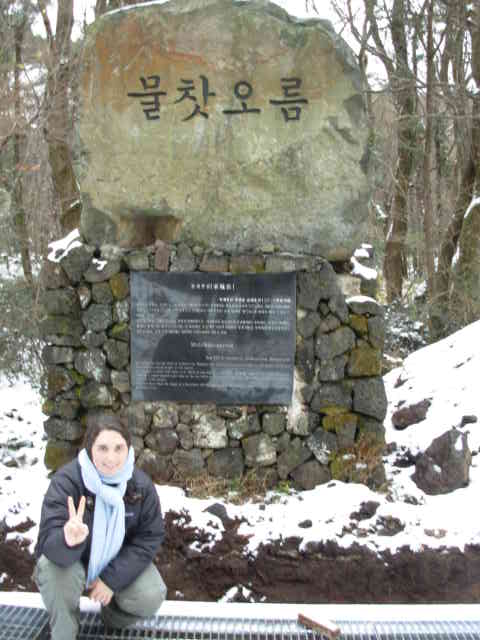
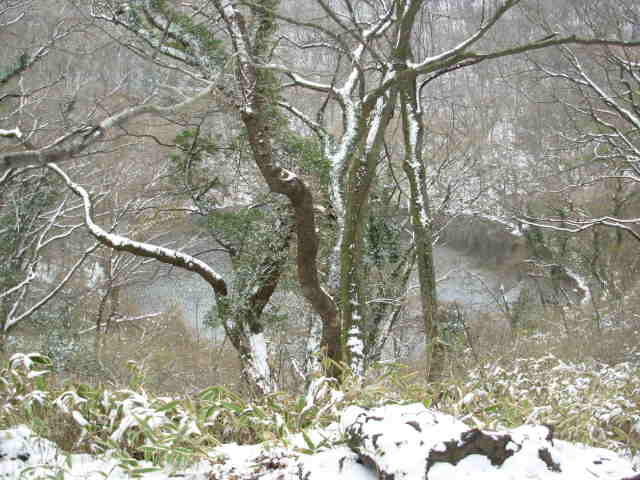
As we hiked through the woods, I enjoyed the silence that is so rare in Korea. The birds, bugs, animals, even people were all hiding away somewhere warmer, as our shoes crunched the snow and our breaths froze in the air. We were hiking a "small mountain", in Korean they're called "Odums" and there are 360 of them on Jeju Island. Odums were formed from lava when the island itself was formed, the largest "odum" being Halla Mountain itself. Each odum has a crater at the top of it, but the odum that we saw today is the only one that actually has water in the crater.


After the hike we enjoyed a lunch of quail, which was the best quail I've ever had. We dipped thin slices of raw quail into boiling water for a few minutes and then into a sort of wasabi/soy sauce mixture before eating them...it was really good. At the end of the meal we had soup and noodles.


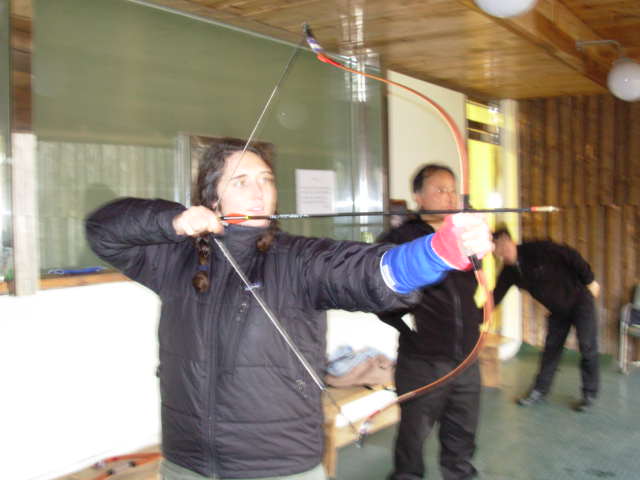
After lunch we headed to the traditional archery place, which turned out to be sort of like a shooting club, but for archery. It was a really nice facility and the teacher was very patient with us.


It was a lot harder than it looks; I was just happy when I could hit the board, let alone the bull's eye. After I all my arrows had been shot for the last time, Mr. Kim handed me his last arrow and I shot it right into the target. I was pretty excited and so was everyone else; it was a good ending to a great day!

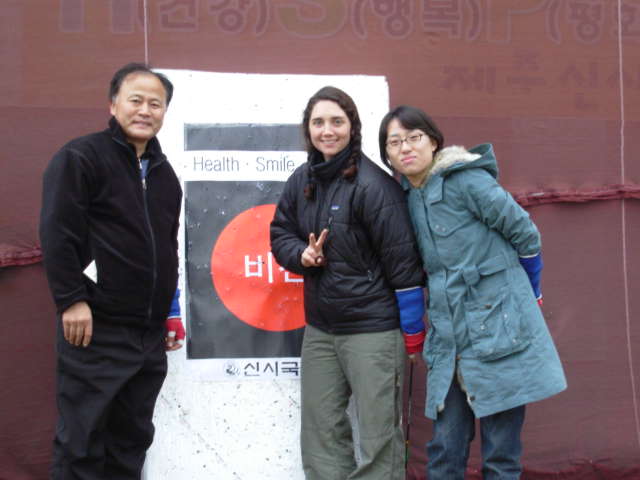
On the left is Mr. Kim, me and Soyeon. You can't see it, but in the picture is the arrow that I shot right into the target on my last shot for the day!

Sunday, December 03, 2006

Joongang Girls High School Winter Festival 2007

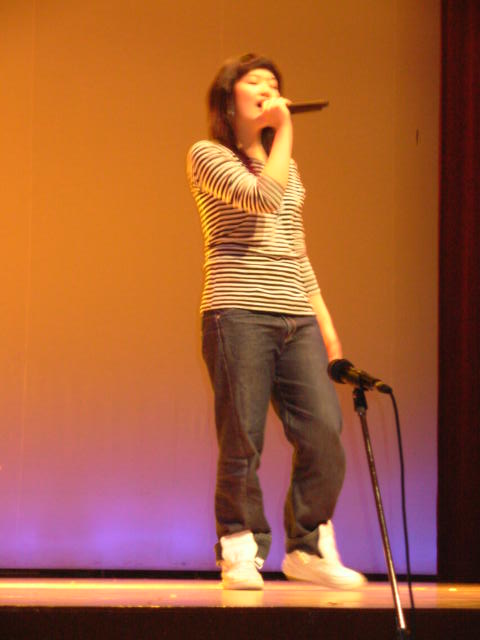
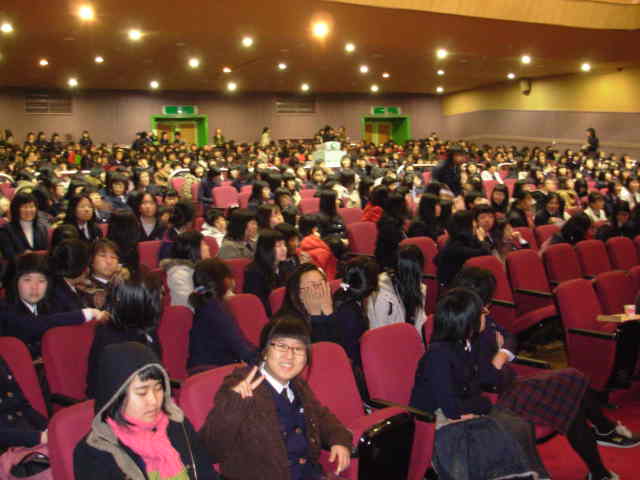
Friday and Saturday we did not have school, instead we all went to a nearby event center to watch the 2007 Winter Festival, which was put on by our own students. This event really cannot be compared to anything in the U.S.A. It's not a Christmas pageant (it's too long for that) and it's not quite a pep rally, but it's sort of something that falls in between the two... In fact the winter festival was composed of two plays (Wizard of Oz and Cinderella), a Japanese, Chinese and English speech contest, a guest lecture by an alumni, a couple of performances by parents (dancing and a fashion show), guest performers from other schools who sang and danced, multiple performances by the dance club, another play about bullying in schools, a chorus competition between all of the 30 classes (10 classes in each grade), numerous singing competitions, a talent show, and lots of pep and school cheers interspersed throughout. I know you may be asking yourself: "How long did it take to do all of that?" The answer is: 13 hours on Friday and 8 hours on Saturday with a one hour break for lunch on both days. The students (all 1200 of them) basically sat in their seats the entire time. I'm not even sure they were allowed to leave the auditorium, because there were girls standing at the doors. My sister, Eunae, is part of the student association so she was very active and busy running things and even hosting part of the show.


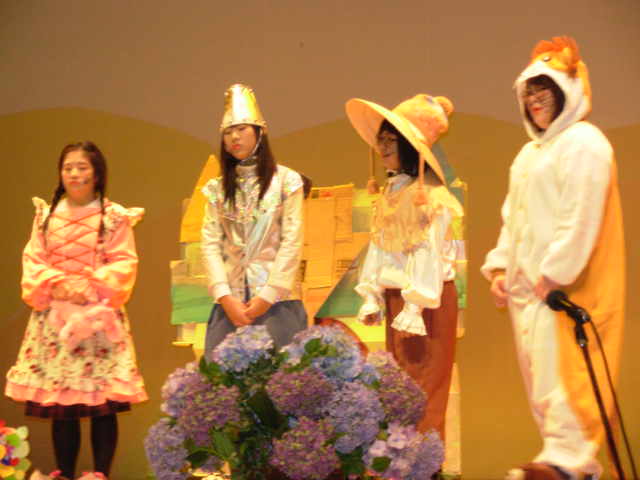
Dorothy, the Tin Man, Scarecrow (Eunae) and the Lion from the Wizard of Oz. At one point Dorothy said "F#$! you!" to the wicked witch; all the girls in the auditorium got it but luckily my principal nor any other teacher heard or understood the meaning.


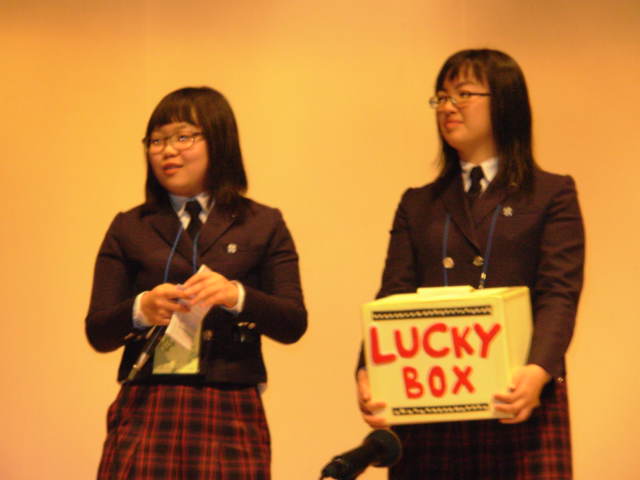
Between performances, they would pull out the "Lucky Box" and call a teacher up to the front to pull a name out of it; the winner got movie tickets. I was called up twice, the first time because my name was on the list and the second time because the girls started chanting my name. It was a little daunting to realize that 800 of the students in the autditorium (2/3) were my students! Eunae, my sister, is the student on the left. I think the "Lucky Box" was the students' favorite part of the program, because they would chant "Lucky Box" at every little break, sometimes even during the program...


One of my 2nd grade students singing an English pop song...


This is what the auditorium looked like. All the teachers' seats were in the front two rows, which was nice for the teachers; however, it also meant that the students were left to do be as noisy as they saw fit.

Friday, December 01, 2006

밥 먹어요 (in English: I eat rice.)

One thing that has been hard to become accustomed to is eating white rice. I know that it is a two way street: Rice doesn't like me as much as I don't like Rice, but it's so hard for me to understand how something so simple can cause me so much pain in my daily life. Koreans believe that bread is to America what rice is to Korea, but what Koreans don't realize is that there is not such thing as a "bread diet" in America; however, the protein diet sure caught on quick (in Korea there is such a thing as a "rice diet"). What I'm trying to say is that the concept of not eating carbohydrates at all or eating them as sides to your protein dishes does not seem to exist in a Korean's ideology about food. In reality there is nothing in American food culture that is comparable to the role that white rice plays at Korean meals. Koreans do not believe that a meal is a meal without white rice. Sometimes after eating all I can of fish, beef, pork, and side dishes of pickled vegetables, I find myself confronted with a large portion (approximately two and a half cups) of steaming white rice and a bowl of soup. It is just assumed that you would like rice at every meal, so I feel bad when it goes to waste, but the idea of putting a bowl of plain white rice into my stomach, when I already feel ready to burst is horrifying. Instead I end up digging strategic holes in my mound of rice with my chopsticks in the hopes of convincing the people around me that I actually ate some of it. I have been told that the custom of serving rice at every meal resonates with Koreans because there are still people who remember a time when white rice was scarce. The subject of white rice is not limited to eating, but also has significant meaning when speaking. A common greeting (mainly among the older generations) is "Have you eaten rice today?" This is a way of asking someone how they are or saying hello, because a person's well-being used to be directly linked to whether they had been fortunate enough to eat rice that day. The cultural significance of white rice was something that I learned quickly, and I'm glad I did because I could've offended many people had I not known the correct answer to the question: "Do you like rice?" This question is not merely an inquiry about your food preferences (as I quickly learned), but really a question about whether you like Koreans and Korea. For that reason, the polite answer is always "yes." The first time I ate at school, I was waiting in the lunch line when my co-teacher asked me if I liked rice. I was feeling particularly rebellious that afternoon and a little tired of etiquette; I just wanted to answer truthfully, so I said: "Not really." He muttered "huh" under his breath and preceeded to add a huge serving of rice on top of the small serving that I had already taken. "Rice is good for you; it keeps you from getting fat." I did not understand where he got this notion, but due to the particular mood I was in, I decided to ask. Asking actually only confused me more, because his answer was this: "Because people in places like Africa, China, and India eat rice and they're not fat." This is where I imagined going back to the U.S.A. and marketing a rice diet: "Just add one cup a day to your current diet and lose weight." Something just didn't add up; there is no way that Americans would be thinner if they just started eating rice on top of what they normally eat. In fact, it is hard to imagine that overweight Americans would lose any weight if they substituted rice for all the bread that they eat. At this point in the conversation I just let it go. I heard on the radio (English/Korean station) that Koreans have many different kinds of rice, just like Americans have many kinds of bread; however, to an American all rice is rice and to a Korean all bread is bread or 방 (pronounced pang). This is entirely true. Sometimes we get rice that is basically white rice with a few purple beans in it. Due to the fact that the coloring from the beans has bled onto the rest of the rice, the rice looks purple, but to me this is just white rice with makeup on. To a Korean, this is healthy rice and has a completely different name than just rice or 밥 (pronounced bap). It is funny because in some ways my relationship with white rice has been a bitter one and will continue to be. However, I still eat white rice with almost every meal. I take about 1 cup and eat it with other things so that I forget about its bland taste. I feel like this is all what I try to do with most of the aspects of Korean culture that I don't particularly like. Instead of fighting them, I try to incorporate them into my daily routine here, because it's part of the experience, but I know that I may never eat rice again once I leave Korea (I am only partially kidding). I also know that the occasional "No" response to the question: "Do you like rice?" although not polite, can sure feel good if the timing is right.

Wednesday, November 29, 2006

Spick and Span

In Korean high schools there are no janitors. This has made me appreciate the role that the janitorial staff at my American high school played and long for those "good old days" when the bathrooms smelled of ammonia. Instead of janitors, the girls clean the school themselves. In principle this is a great idea, because it seems like it would teach them that they must clean up after themselves, not to litter, and that the state of their school environment is up to them, not someone else. When I first arrived at my school I felt good about this policy. As the weeks go on and the amount of bacteria that I imagine lingering in every crevass and corner of this school increases, I realize that like socialism, such a system makes more sense in theory as opposed to practice. It is almost comical to watch my students "clean" the school. First of all, the only materials that they use are water, dirty hand towels and short 3 foot long brooms that resemble props from a midget Halloween play. The girls hunch over (due to the short handle of the broom) swishing the broom back and forth across the stairs or the ground, not even bothering to use a dust pan, either because they are not provided or because it just didn't occur to them. Another girl takes her wet hand towel and wipes down the counters, etc. I don't think these towels ever get washed, because there seems to be no system in place for cleaning the rags, only for cleaning with them. (There is a whole rack of filthy towels in my office.) The girls also wash the dishes from the teacher's lounge and clean the bathrooms. Cleaning the bathroom involves little more than literally hosing down (with a hose) the entire facility including the toilet. I have never seen any sort of disinfectant or bleach used in the bathrooms or anywhere else. When the girls wash the dishes, they take an old sponge (probably as old as the school itself) and wipe down the dishes as they run them under lukewarm water. My own reaction has been to change personal behaviors in order to safeguard myself at least slightly from the battlefield of bacteria that is my school. I have hand sanitizer on my desk which I use periodically, and I no longer accept tea or coffee that is not served in a paper cup. I thought that the cleaning policy at my school would encourage the girls to take care of their school more, but in fact the girls still trash things, because they know that "Someone Else" will clean it up, it doesn't matter if that someone is a janitor or another student.

Birthday Party Photos

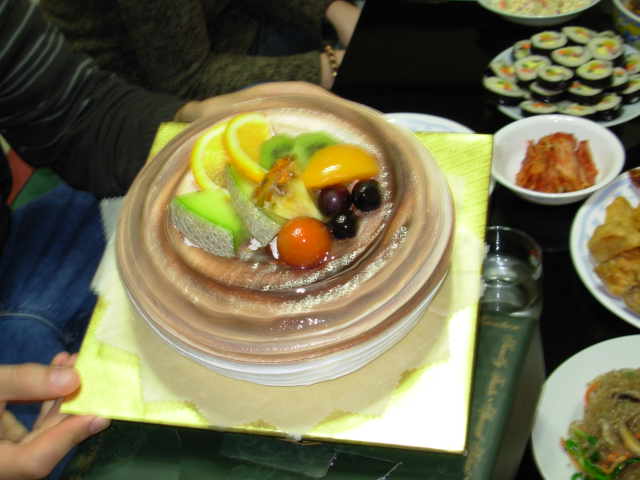
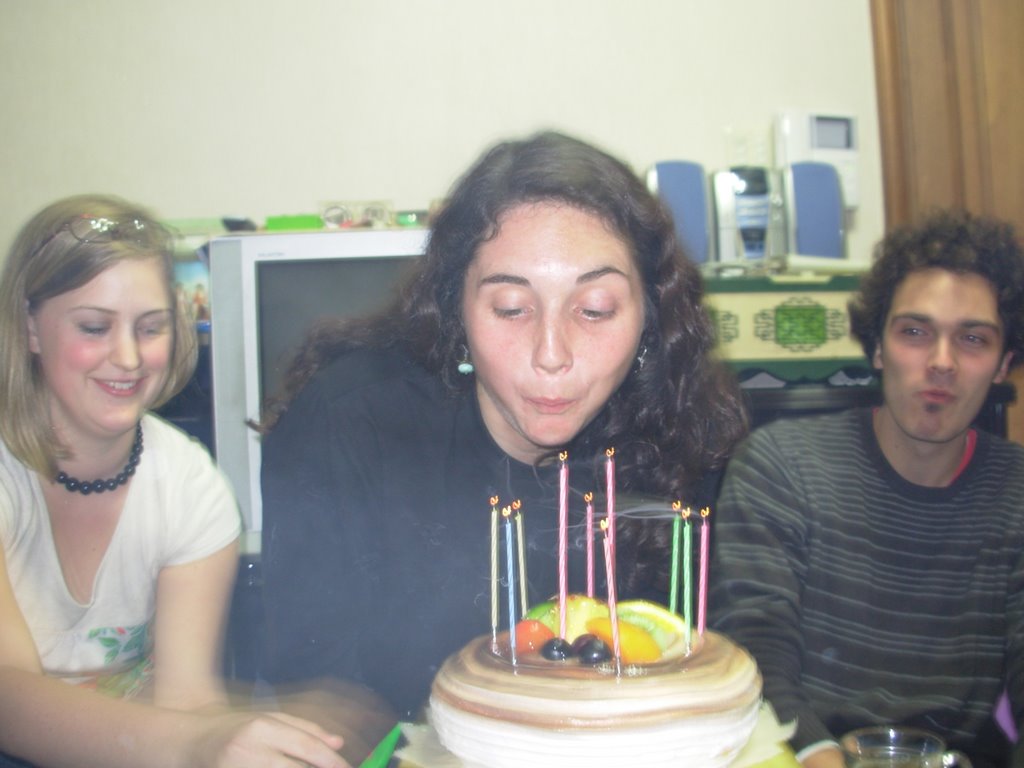
My incredible Korean birthday cake! That is real fruit on top!

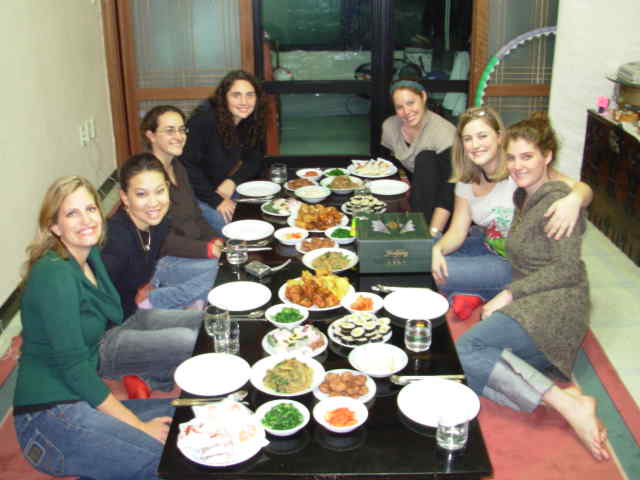
We moved what little furniture we have out of our living room and set up extra tables for the party!


Koreans make it easy to blow out the candles; they have two longer candles that represent 10 years each and 6 smaller ones for my 26 years...

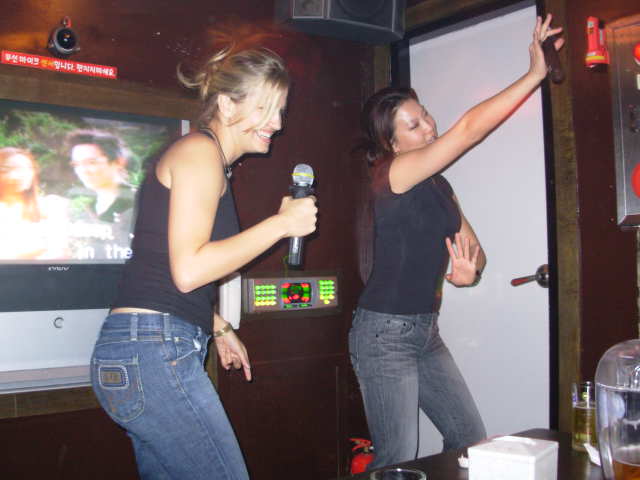
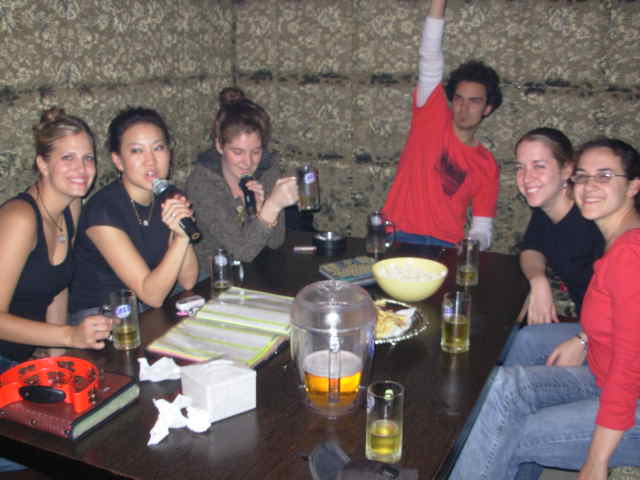
After my house we went to a nore bang (singing room is the direct translation) where Emerald and Julienne were really tearing it up!

These 6 ETAs live on Jeju Island with me! Singing is a big part of Korean culture; although, for the most part Koreans have really nice voices so it's easy to understand why they like to sing. Americans on the other hand...

Tuesday, November 28, 2006

The Fish Festival

Last Saturday Jeehee, Lindsay, Gretchen and I went to a fish festival in a small town called Daejon.

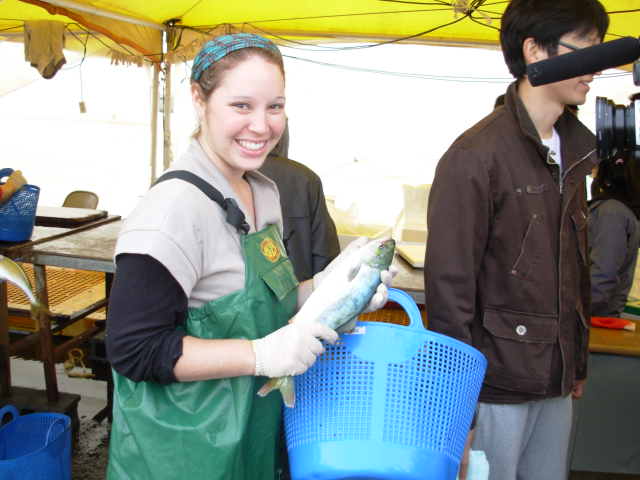
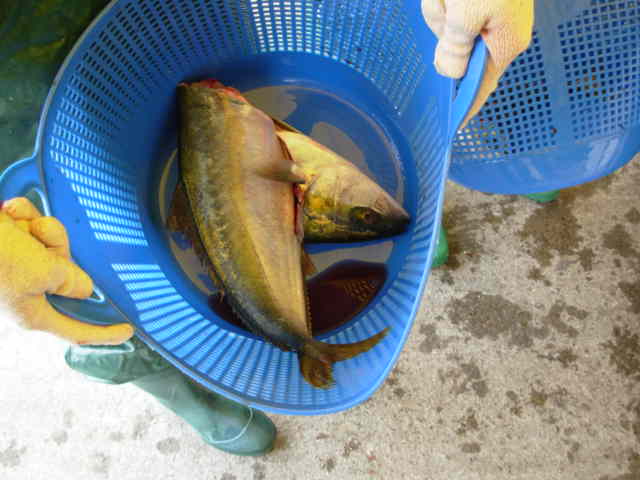
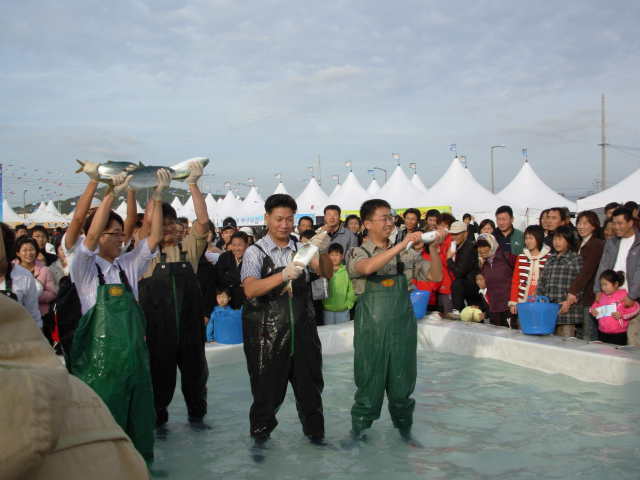
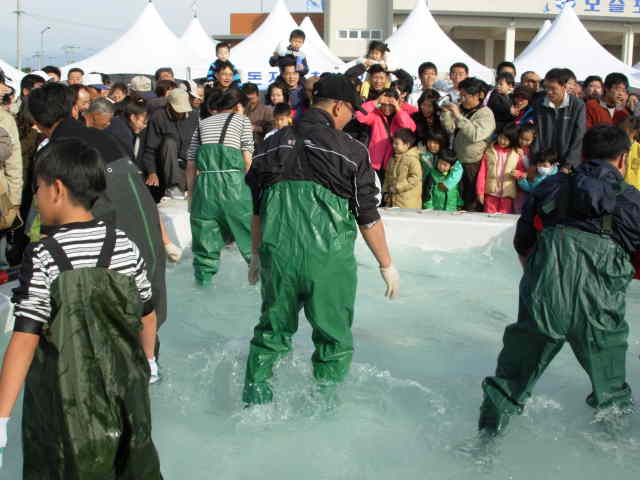
At the fish festival you can pay $10 to get in the pool and try to catch a fish with your hands (you wear gloves). The fish themselves are worth 30$ each, so if you can catch one or two you're doing pretty good.


There are about 10 people in the pool at a time and about 15 fish; you are competing against the other people to grab as many fish as you can and throw them in a basket before there are no more.


My friend Gretchen with her fish.


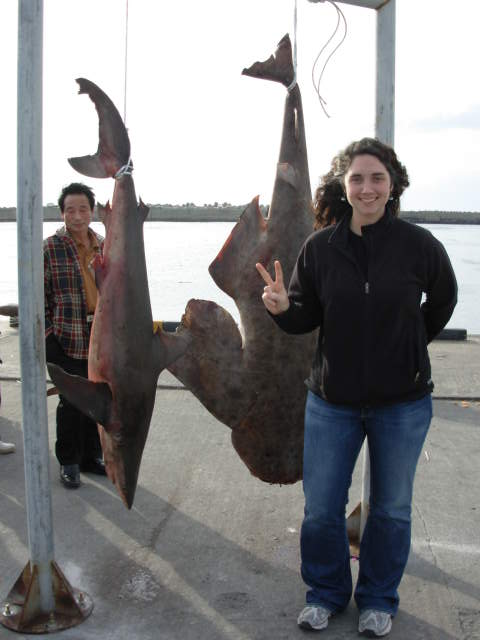
Here I am with two huge dead fish; the one on my right is a shark.


Gretchen's fish after they cut the head off.

Monday, November 27, 2006

생일주가함니다 in English: "Happy Birthday to you"

Today is my birthday and I'm celebrating Korean style. This means that I had birthday soup and white rice for breakfast (birthday soup is a broth with seaweed and beef in it), I had some of my friends over to the house for a few hours on Saturday, tonight I am going out to dinner, and I have received numerous very Korean birthday presents (a Korean birthday present is usually something like a pair of socks, scarf, chocolates, earings, CD, stationary, etc.). Last Saturday evening my Korean mother asked me to invite my friends over for a birthday party with lots of Korean food and cake. So I invited my fellow Fulbright friends over for a party that started at 6:30pm and ended at 9pm. My mother had prepared an enormous amount of food, ranging from dok boki (Korean rice noodles in a spicy red sauce with a sort of fish cake that resembles tofu), chop che (sort of like a Korean version of lo mein), little sausages (possibly SPAM), dok (rice cake with red bean paste filling), fried chicken and sweet sesame chicken wings (this is considered American food and was ordered from the fried chicken place). We had a nice gathering in the middle of my host family's living room (my host mother moved the two pieces of furniture, a cot and a low round table, out of the way and set up three long rectangle tables.) It was very festive and my friends enjoyed seeing another Korean home; I'm finding that we all live in very different situations (my home is distinctly Korean-style, whereas some are living in more westernized apartments.) Today feels like little less than a school day and that is how a Korean birthday is celebrated. Birthdays are not a very big deal here, in part because age does not change until the new year. In Korea I was 27 before today and I will be 27 tomorrow; however, in America I was 25 yesterday and today I am 26 (this is a whole separate issue which I have no time to delve into at the present moment.) It is a bit complicated, but the way that Koreans calculate birthdays is with the New Year, so everyone who was born the year that you were born is the same age as you. This makes sense also, because in Korean society the only people who are considered your true equals or "friends" are the people who were born in the same year as you. This is all part of the Confucian hierarchy that I constantly refer to in these blogs, because it is the underlying source of many modern customs and behaviors. To further complicate matters, when you are born you are 1 year old, whereas in America you are 0 years old. All of this accounts for the discrepancy between my American age and my Korean age (most people are only a year older in Korean years, but because I have birthday that is late in the year, I there is a 2 year discrepancy for most of the year). I keep telling my students that I must go back to America so I can be young again. Although this started off as a joke, there's nothing like a looming 28th Korean birthday (New Year's) to make me feel that perhaps I really do need to go back to America before I start feeling my Korean age, or even worse... acting my Korean age.

Thursday, November 23, 2006

Happy Thanksgiving!

Teaching has been a really interesting experience for me, but in many ways this experience is nothing like being a "real" teacher in America or even Korea, because of the freedom that we have in regards to our curiculum. There are no expectations, nor are there any restrictions as to what can be discussed in the classroom. Basically, we are supposed to speak English to the students, engage them in various English speaking activities of our own choosing, and teach them about American culture. Sometimes I can't help but chuckle to myself when I find myself at the front of a classroom, facing 40 pairs of inquisitive jet black eyes, explaining my culture as if it were as simple as 2 + 2 = 4. Explanations like the following seem out of place in a classroom: a turkey is cooked for 3-4 hours, cranberry sauce is eaten on turkey and stuffing is cooked inside of the turkey, we watch the Macy's Day Parade in the morning and football in the afternoon on Thanksgiving, and the Thanksgiving meal is usually served in the afternoon between noon and 6pm. Although these are the details that the students find interesting, it often feels bizarre to hear American traditions described out loud, because these things are things that we do, but rarely ponder or even think twice about. In the grand scheme of things, our traditions sometimes remind me of our youth as a nation. The closest Korean holiday to Thanksgiving is Chuseok, but the traditions of Chuseok include things like making wishes on the full moon, performing an elaborate prayer ceremony that honors ancestors from generations past, cutting the grass on their ancestor's graves the week before and returning on Chuseok Day to pour soju on each grave, and wearing traditional Korean clothes like hanboks (Korean version of the kimono) Perhaps it is just because it is my culture, but watching a commercial parade with floats depicting Ronald McDonald, Sesame Street characters, and Barbie, eating a lavish meal, and later watching American football seems trivial in comparison. Please do not misunderstand me; I love Thanksgiving! In fact, I think Thanksgiving is my favorite holiday! It's just that sometimes it feels so ironic that our culture is the dominant culture in the world, yet so new and in many ways still undefined in comparison to cultures and traditions which have been around for centuries preceeding our own.

Sunday, November 19, 2006

Early Thanksgiving in Seoul

Friday night I flew to Seoul for an early Thanksgiving celebration at the U.S. Ambassador's home. All but 2 of the Fulbright ETAs were there, and it really felt like Thanksgiving, despite the fact that I am thousands of miles from my family. Thanksgiving dinner began at 2:30pm on Saturday; it was a beautiful fall day, and we arrived with enough time to look around the Ambassador's residence. Ambassador Vershbow and his wife, Lisa, were very hospitable, and they seem like very nice people. The residence is this amazing Korean style home that was built with imported wood from the pacific northwest, United States. Inside they have an art collection of contemporary American crafts. Apparently, each ambassador is allowed to choose a collection of American art to display in their home overseas, and they chose handmade crafts, because they thought it would go nicely with the traditional style of the home.

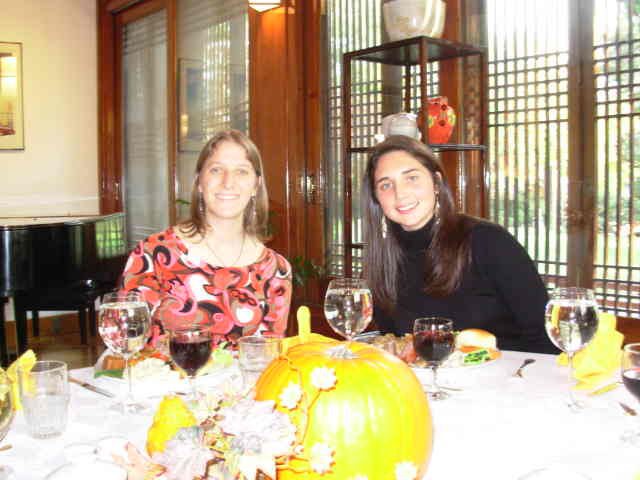
My friend Sara and I, with full plates of delicious food. It was catered by a hotel from the military base in Seoul; the food was delicious!


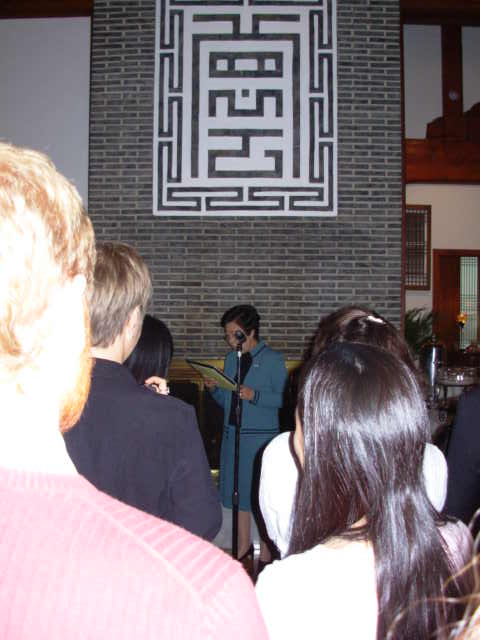
The Fulbright director, Mrs. Shim gave a short address, followed by a short speech by Ambassador Vershbow.


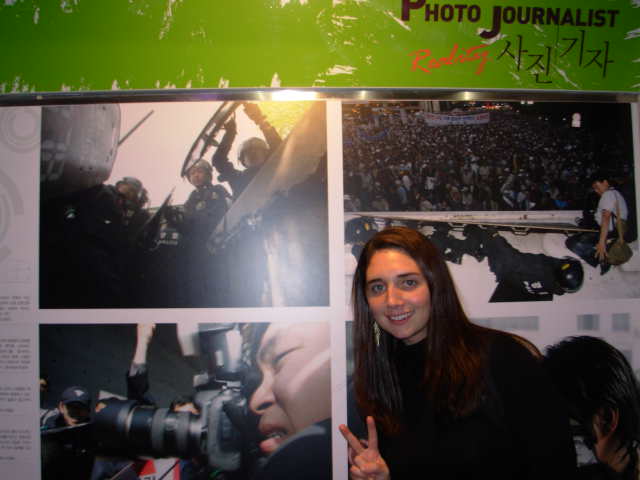
After the meal, as we headed back to our hotel, we came upon this interesting outdoor photo exhibit, the subject of which was quite amusing. We spotted it from across the street and decided to check it out. As we got closer we found that it was a very dramatic photography exhibit about photojournalism. The entire exhibit, (some 200 pictures or so) are "action" shots of photojournalists doing their jobs (in other words, the whole exhibit was composed of photos of photographers taking photos.) The title of the exhibit was "Photojournalist Reality". It seemed like the exhibit might have been motivated by a sincere feeling of under-appreciation. In the picture above, I am posing in front of one of the "action" shots of photojournalists on the job.

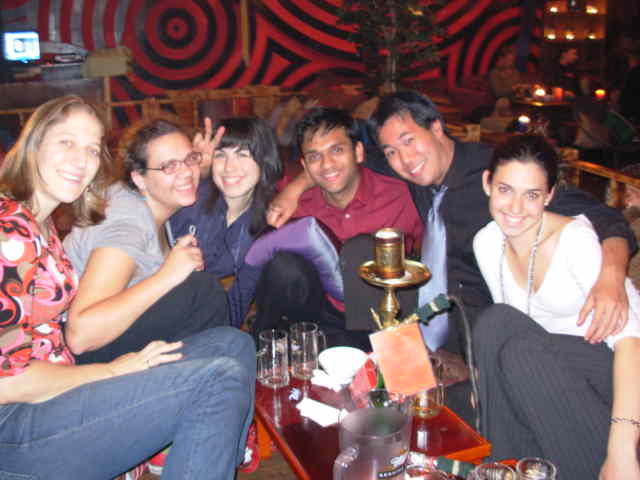
Saturday night we went to a hooka bar; it was really nice to catch up with some of the ETAs that I don't ever get to see.


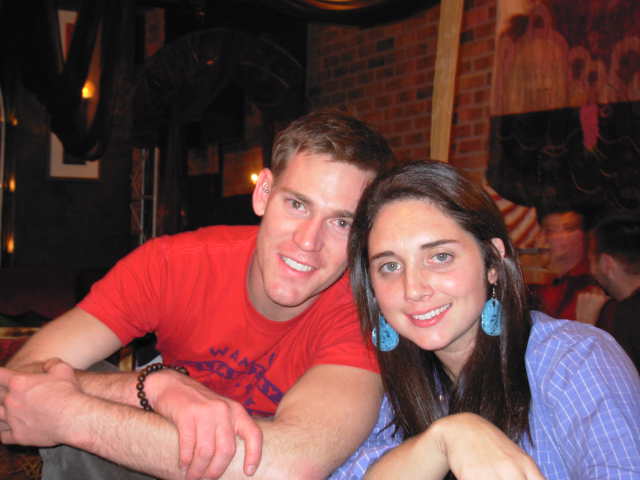
Here I am with my good friend, Dana; he and I are probably going to teach a winter camp together in January after I get back from the United States.